
Welcome to Sparc Pulse

3×3.EXE Women’s MVP Ladder — Round 1

The 3×3.EXE PREMIER Women’s 2026 season announced itself in Utsunomiya with the kind of basketball that makes opening rounds worth remembering. Twelve teams fought through a group-stage gauntlet on Day 1, with the four group winners returning the following day to decide who would claim the opening-round title. That honour went to UENOHARA SUNRISE.EXE. Here are the ten players whose performances across both days stood out from the field.
#1 — Shinobu Yoshitake (UENOHARA SUNRISE.EXE)
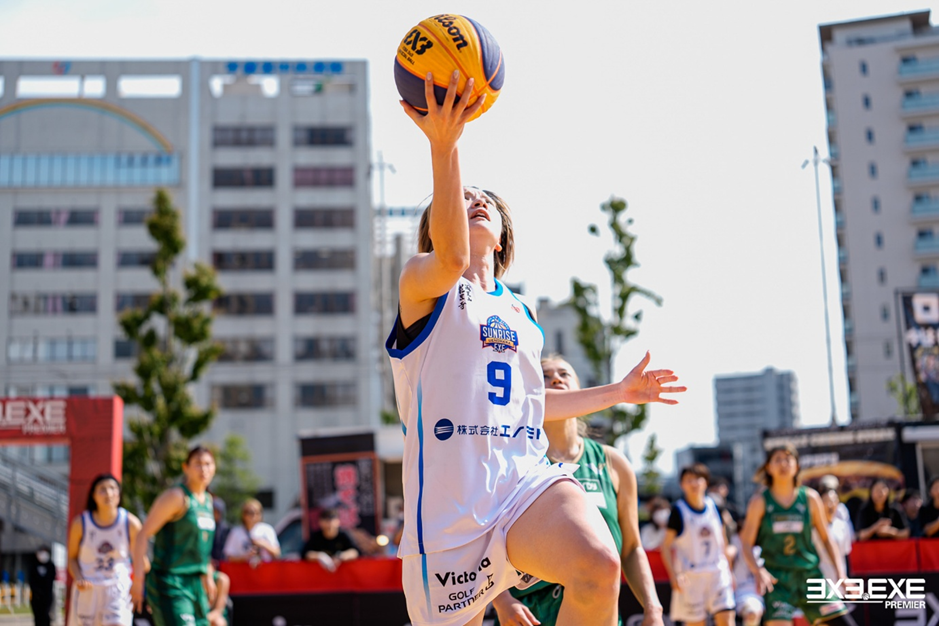
The first thing to understand about Yoshitake’s Round 1 is how quickly she establishes herself in a game. Against FLOWLISH GUNMA.EXE, she had seized control of proceedings within the first half-minute of play — dictating tempo, finding the basket in multiple ways, and responding to every moment of GUNMA pressure with another score. It was the kind of performance that makes opposing coaches reach for their timeouts early and leaves teammates playing with a quiet confidence. The win over SHINJUKU GIVERS.EXE added another chapter, and UENOHARA moved through the group without ever looking like a team that needed to be saved.
Day 2 only reinforced what Day 1 suggested. The semi-final against ST-KASUMI.EXE was controlled in no small part by Yoshitake’s activity in and around the basket, and when the final arrived she continued to deliver in the moments that mattered most. In 3×3, there is a specific type of player who elevates when the stakes rise rather than shrinking from them. Over two days and four games, Yoshitake proved she belongs firmly in that category. The top of this ladder is hers by clear margin.
#2 — Ibuki Oku (TOKYO VERDY.EXE)
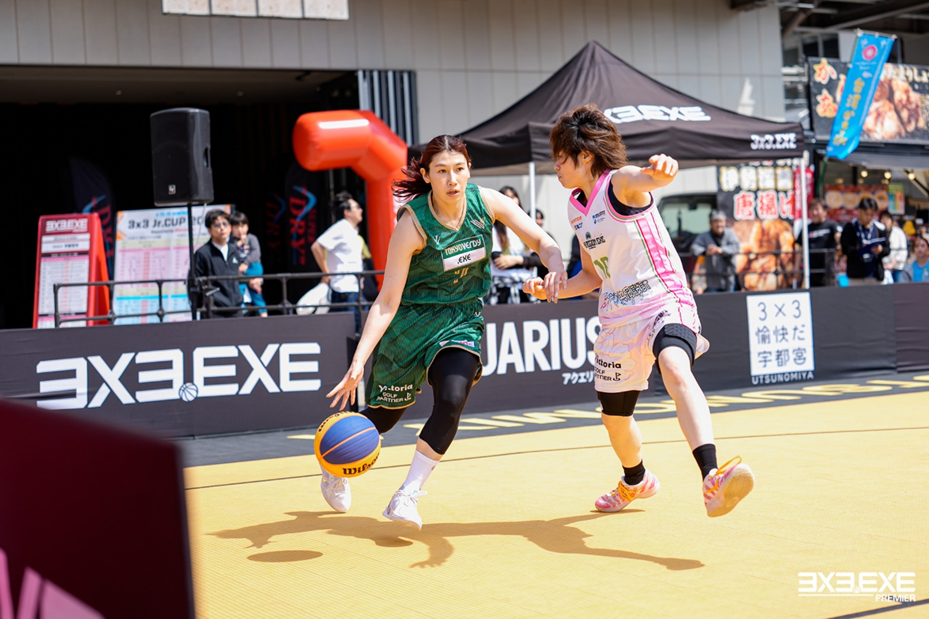
TOKYO VERDY.EXE’s run to the final was built on many things — tactical discipline, collective depth — but when the game needed igniting, it was Oku who reached for the match. Against GIFU VALKYRIES.EXE she turned a deficit into a lead almost single-handedly, stringing together scores that shifted the game’s momentum entirely and left GIFU unable to recover. Against ECHAKE-NA NOTO.EXE she did it differently but with equal effect — a second-half acceleration that turned a competitive contest into a comfortable win, the kind of performance that stamps a team’s authority on a day.
The semi-final against SHINSHU SAKU REGION.EXE was the round’s showcase for Oku at her most complete. She scored early, scored often, and crucially kept scoring when SHINSHU made their runs, neutralising each comeback before it could build. The final was a harder story — UENOHARA’s defence is formidable and Oku was kept quieter than in the preceding three games. But three games of high-end individual output are not diminished by one well-defended final, and across the full round, only Yoshitake was more impactful with the ball in her hands.
#3 — Tou Endo (UENOHARA SUNRISE.EXE)
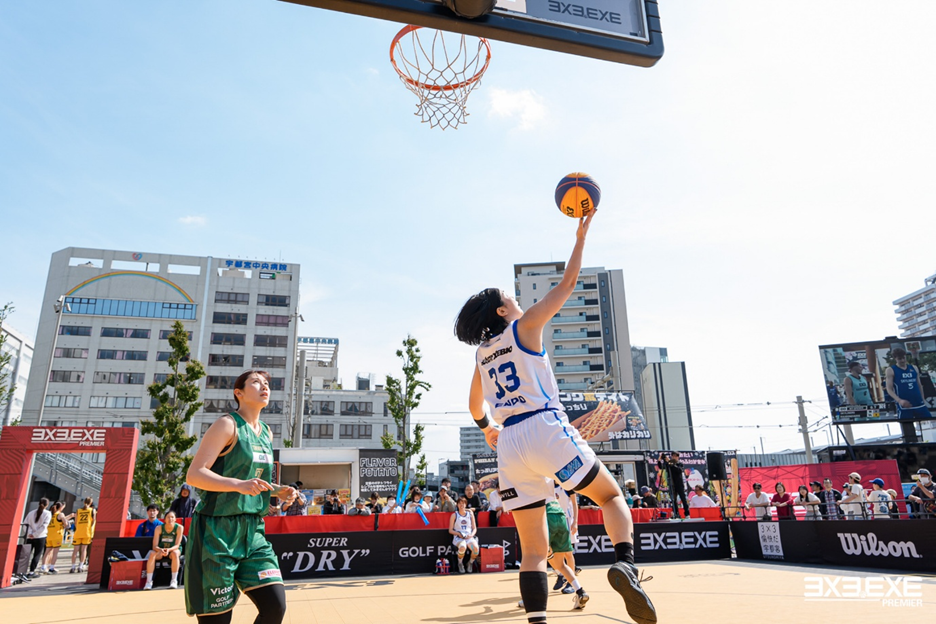
If Yoshitake is the relentless engine of UENOHARA SUNRISE.EXE’s attack, Endo is the high-explosive device. Her two-point shooting — executed with what appeared to be genuine conviction rather than opportunism — was the defining individual weapon of the round whenever she had the ball in range. Against SHINJUKU GIVERS.EXE in the group stage, she took the game apart in the first half with a series of two-point conversions that gave UENOHARA a lead so commanding the second half was effectively ceremonial. It was the kind of performance that travels through a group stage draw and sends messages to every team left to play.
But it was in the final where Endo wrote her defining moment of Round 1. With TOKYO VERDY.EXE unable to find a response, she landed back-to-back two-pointers in the second half that closed the door on any realistic VERDY comeback. Those two shots — taken when the game was still live, landed when they mattered most — are the clearest example of clutch individual play the play-by-play record of this round contains. Third place on this ladder is earned; the gap between Endo and fourth is real.
#4 — Karin Imori (TOKYO VERDY.EXE)
The danger of TOKYO VERDY.EXE as a team is that neutralising Oku does not neutralise their attack. Imori is a large part of the reason why. Against ECHAKE-NA NOTO.EXE she was the first name on the scoresheet and among the last to leave it, contributing across the full duration of a game VERDY controlled from the opening possession. In the semi-final she delivered again, and in the final she continued to produce even as the team around her struggled to find rhythm. Four games, consistent contribution at every stage of the competition — Imori’s reliability is the quiet backbone behind VERDY’s best performances in this round.
#5 — Kanako Ohashi (ST-KASUMI.EXE)
There is an argument that Ohashi was the most versatile individual scorer of the entire group stage. Her performance against ATHLETE X KANSAI.EXE demonstrated a range of scoring tools — free-throw efficiency, mid-range finishing, and the two-point shot used at the right moments — that ST-KASUMI will need to replicate when the competition stiffens later in the season. In the semi-final against the eventual champions, she refused to allow the game to become a foregone conclusion, connecting on successive two-pointers in the second half that briefly made UENOHARA’s coaches uncomfortable. Losing 13-9 to UENOHARA SUNRISE.EXE in a semi-final is not a result to be ashamed of, and Ohashi’s contribution across three games reflects a player capable of performing at the highest level this competition offers.
#6 — Rua Tsubouchi (TOKYO VERDY.EXE)
Consistency in 3×3 is underrated, and Tsubouchi demonstrated it in a way that stands out across this entire round. In a competition where individual outputs tend to be volatile — one big game followed by near-silence — she produced meaningful contributions in all four of VERDY’s games, from the group stage through to the final. She was not the dominant player in any individual game, but she was never absent, never inconsequential, and never a gap that opponents could exploit. The most reliable four-game run in the field this round belongs to her, and that earns a top-six placement without apology.
#7 — Yuka Fujisaki (ATHLETE X KANSAI.EXE)
KANSAI did not make it to Day 2, and Fujisaki cannot be ranked as highly as she might deserve because of it. But within the constraints of a two-game group stage, she produced one of the most sustained individual attacking performances of the round. Against SANJO BEATERS.EXE she was the entire KANSAI offence for long stretches — two-pointers, free throws, responding to a SANJO comeback that clawed all the way back to level and then beyond. The fact that SANJO eventually prevailed 21-20 in what came down to a single final possession does nothing to diminish Fujisaki’s individual impact. She is the player KANSAI will build around as the season progresses, and she has already shown this field what she is capable of.
#8 — Yuika Kirihara (SHINSHU SAKU REGION.EXE)
SHINSHU SAKU REGION.EXE’s scoring is not a one-woman show, and Kirihara’s Round 1 is the proof. She opened with a commanding group-stage performance against NAGOYA DERRAZE.EXE — varied, efficient, and forceful — that set the tone for SHINSHU’s dominant run through Group A. The TAITO OWLS.EXE game saw her take a quieter role, but she returned to form when the pressure peaked. In the semi-final against TOKYO VERDY.EXE, a second-half sequence of consecutive scores from Kirihara reduced the deficit to three and had the VERDY bench noticeably tense. Three games’ worth of evidence positions her as SHINSHU’s second most important offensive weapon — a title worth having on a team that reached the last four.
#9 — Mizuki Kamiya (SHINSHU SAKU REGION.EXE)
Kamiya’s round followed an arc that coaches love to see: quiet opener, breakout performance in the must-win game, competitive showing on the biggest stage. Her contribution in the tightly-contested group decider against TAITO OWLS.EXE was SHINSHU’s most important in terms of keeping the team in a game that ebbed and flowed throughout. The two-point shooting she produced in that game — landing at a moment when TAITO had begun to believe they could win it — was the decisive individual intervention in SHINSHU’s path to Day 2. The semi-final was a tougher night against a sharper VERDY defence, but two-plus games of meaningful production makes Kamiya a player to track as the season builds.
#10 — Fuyuko Takahashi (FLOWLISH GUNMA.EXE)
On a day when FLOWLISH GUNMA.EXE were producing results that turned heads in the group stage, Takahashi was the reason. Her performance against SHINJUKU GIVERS.EXE was one of the most dominant individual showings of Day 1 — a sustained, multi-faceted attacking display anchored by the two-point shot but far from limited to it. GUNMA’s 21-13 win was built around her, and it showed enough quality to suggest this team will cause problems when they return in later rounds. The limitation here is game count — GUNMA did not advance — but within two games Takahashi made a case for this ladder that could not be ignored.
Summary
UENOHARA SUNRISE.EXE are the opening-round champions, and the performances of Yoshitake and Endo across four games explain precisely why. But TOKYO VERDY.EXE arrive at Round 2 with their own claim to contender status — Oku, Imori, and Tsubouchi form a collective that gives VERDY multiple answers to every defensive scheme. Elsewhere, Fujisaki, Ohashi, and Takahashi each showed in limited game time that the competition does not thin out beyond the top two teams. Eight rounds is a long season. The Ladder has its first data. Now it gets interesting.
Results